by Romain Bertrand, Multi-Classroom Leader at Ranson IB Middle School
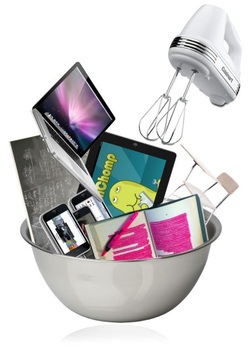
When terms like Blended Learning become buzz words in Education, people often start engaging in fierce debates around their value without even having taken the time to define them. Ensue ideological battles with little connections to the reality of these words and their concrete applications in our schools. At Ranson IB Middle School, we have been blending the learning in math for over a year now and I thought it would be a great time to bring some clarity around what blended learning is and what purpose it serves in our school. I also thought it would be valuable to share with you 5 lessons we learned, sometimes the hard way, through 12 months of implementation.
What is Blended Learning and How Does It Look at Ranson IB?
Let’s keep it simple: Blended Learning is basically any combination of online and face to face instruction within a curriculum. As you can imagine, this can be done in many ways and with various degrees of technology integration. At Ranson IB, we are using rotation models during class time to incorporate up to 40% of online instruction in 6th and 7th grade math (8th grade to follow next year). What it literally means is that our students rotate between face to face instruction with their teachers in smaller groups of 15-17 students and online instruction under the supervision of two learning coaches and their Multi-Classroom leader, or MCL (and that would be little old me).
Let’s keep it simple: Blended Learning is basically any combination of online and face to face instruction within a curriculum. As you can imagine, this can be done in many ways and with various degrees of technology integration. At Ranson IB, we are using rotation models during class time to incorporate up to 40% of online instruction in 6th and 7th grade math (8th grade to follow next year). What it literally means is that our students rotate between face to face instruction with their teachers in smaller groups of 15-17 students and online instruction under the supervision of two learning coaches and their Multi-Classroom leader, or MCL (and that would be little old me).
- In 6th grade they do so in a learning lab. Imagine half of your class being in and out to go to a computer lab where they work on activities created, assigned and tracked by the team. The teacher stays in the class while the students work with the learning coach and the MCL
- In 7th grade they rotate similarly between face to face and online instruction but stay in their classroom where half the space is occupied by a chromebook learning lab. In that case the learning coach and the MCL float between the classes. (See video example below)
Why in the World Did We Do This?
When asked this question (easily at least once a week), I always start by asking a question back: “Can you think about a learning experience you had lately during which you did not blend online and traditional learning?” Usually, people pause and realize that they can’t. May that be going to Wikipedia (throwing the classic bait;)) to learn more about an historical era after watching a movie or researching on multiple websites before making a costly purchase, we are constantly blending learning methods. Why should our students learn in our schools any differently?
But beyond the obvious necessity to maximize what technology has to offer, we had one big goal in mind: Providing each of our students the rigor, quality and pace of instruction they needed. That can seem like a daunting task in a school where the spectrum of student achievement and reading level within one grade level can still be wide. We did not want any of our scholars to feel rushed or overwhelmed but we couldn’t accept any of them being slowed down either. We felt like blended learning could provide us with the framework to tackle this challenge and after one year of trials and errors, here are 5 extremely valuable lessons we have learned about blended learning:
When asked this question (easily at least once a week), I always start by asking a question back: “Can you think about a learning experience you had lately during which you did not blend online and traditional learning?” Usually, people pause and realize that they can’t. May that be going to Wikipedia (throwing the classic bait;)) to learn more about an historical era after watching a movie or researching on multiple websites before making a costly purchase, we are constantly blending learning methods. Why should our students learn in our schools any differently?
But beyond the obvious necessity to maximize what technology has to offer, we had one big goal in mind: Providing each of our students the rigor, quality and pace of instruction they needed. That can seem like a daunting task in a school where the spectrum of student achievement and reading level within one grade level can still be wide. We did not want any of our scholars to feel rushed or overwhelmed but we couldn’t accept any of them being slowed down either. We felt like blended learning could provide us with the framework to tackle this challenge and after one year of trials and errors, here are 5 extremely valuable lessons we have learned about blended learning:
1. Blended Learning provides a strong framework to differentiate and ultimately personalize student learning.
It won’t happen overnight but by creating groups, schedules and processes needed to blend, you create an excellent framework to differentiate and ultimately personalize student learning. Software and websites such as Compass Learning Odyssey or Dreambox Learning help you better know what each of your students really need. They can even adapt to these needs online and make sure students are challenged at the appropriate pace and level. It would be foolish however to count solely on them. The human factor in this process is absolutely essential which takes us to our second lesson…
2. Pretty please, use Blended Learning to expand the reach of your excellent teachers!
Helped by Public Impact and Project LIFT through the Opportunity Culture movement, we were pushed to think outside the box and create new positions aligned with our blended learning. Each of them have a common goal: Expanding the impact of an excellent teacher. Concretely, our two blended learning teachers create online lessons that impact all our students, using Showme or Educreations for example. They evaluate weekly the best activities on the different sites we use and they analyze student data to make the adjustments needed. To do this, they receive additional planning time and pay. As a MCL, I use our Blended Learning process to expand my teaching impact to over 200 students a week without having a yearly class assigned to me. I pull groups of students during their online learning time to provide them with flexible teaching tailored to their current needs (identified through the analysis of their learning data). I also coach my 6 math teachers and 2 learning coaches weekly and create resources to help them maximize the opportunities given by our framework. As you can see, our models help us knock down walls between classrooms to collaborate in a smarter way.
3. There is no miracle website out there, stop looking for it!
Most of the time when people reach out to find out about what we do, they primarily want to know what websites we use. We still in a sense have this utopia that we are going to find the miracle resource that will concentrate in one place all we need. Sorry for the wake up call but it does not exist. At Ranson IB, we use time-technology swaps weekly to free planning time for the two blended learning teachers and myself to evaluate what our resources have to offer in order to compose the best “playlist” of activities for our scholars. We also have to constantly think about the best ways to bridge online and classroom instruction to keep our students engaged and the learning relevant. In other words, computers will never replace great teaching. You would be surprised by how quickly students can get bored when working with an online activity that is not relevant to their current needs. Technology should instead enhance and improve the work of great teachers. Blended Learning will just show you that excellent teaching is as much needed as ever. You can then start working on better collaborating to make it trickle down to each and every student in your school.
4. Building the culture around Blended Learning is tough but vital.
Again, stop dreaming that, by giving students computers or tablets, it will suddenly eliminates all the problems you may have faced before in class. It won’t! Students can get very passive or complacent in front of a device. A lot of culture building work needs to be done to ensure that students learn the necessary skills to become better online learners. Digital citizenship for example is something we need to stress more in our school. We also always try to support our students in becoming more independent and show more perseverance in their work online. We still have a long way to go but we are now pushing in the right direction.
5. Think about the highest level of guidance and support possible for your teachers…now, raise it to the 2nd power!
We have all experienced brand new devices or tools being left untouched by teachers when they are not trained and supported appropriately. The same thing will happen with Blended Learning if you do not provide strong guidance for your teams. Be prepared to train them regularly on new resources but also to support them in class to be able to maximize them. Help them face setbacks without wanting to give up and revert to old models. The temptation can be there at times to say “It won’t work!” just because it is so different than what we have done before. Help them see and celebrate successes along the way. Seek their feedback all the time to make the process better and make sure that they are always in the drivers’ seats in this adventure. Do not assume that giving them technology will make everything better by itself, or you are in for a rough awakening. Instead prepare to teach, mentor and support to the 2nd power!
I hope these 5 lessons from the Blended Learning trenches will help you in your own journey toward the blend of online and classroom instruction that will work for your students. Remember, along the way, that the most powerful factor of change in a student life is the relationship with an excellent teacher not with a device. Technology can serve and enhance great teaching and a strong vision, but without it it will simply be a pretty little gadget.
It won’t happen overnight but by creating groups, schedules and processes needed to blend, you create an excellent framework to differentiate and ultimately personalize student learning. Software and websites such as Compass Learning Odyssey or Dreambox Learning help you better know what each of your students really need. They can even adapt to these needs online and make sure students are challenged at the appropriate pace and level. It would be foolish however to count solely on them. The human factor in this process is absolutely essential which takes us to our second lesson…
2. Pretty please, use Blended Learning to expand the reach of your excellent teachers!
Helped by Public Impact and Project LIFT through the Opportunity Culture movement, we were pushed to think outside the box and create new positions aligned with our blended learning. Each of them have a common goal: Expanding the impact of an excellent teacher. Concretely, our two blended learning teachers create online lessons that impact all our students, using Showme or Educreations for example. They evaluate weekly the best activities on the different sites we use and they analyze student data to make the adjustments needed. To do this, they receive additional planning time and pay. As a MCL, I use our Blended Learning process to expand my teaching impact to over 200 students a week without having a yearly class assigned to me. I pull groups of students during their online learning time to provide them with flexible teaching tailored to their current needs (identified through the analysis of their learning data). I also coach my 6 math teachers and 2 learning coaches weekly and create resources to help them maximize the opportunities given by our framework. As you can see, our models help us knock down walls between classrooms to collaborate in a smarter way.
3. There is no miracle website out there, stop looking for it!
Most of the time when people reach out to find out about what we do, they primarily want to know what websites we use. We still in a sense have this utopia that we are going to find the miracle resource that will concentrate in one place all we need. Sorry for the wake up call but it does not exist. At Ranson IB, we use time-technology swaps weekly to free planning time for the two blended learning teachers and myself to evaluate what our resources have to offer in order to compose the best “playlist” of activities for our scholars. We also have to constantly think about the best ways to bridge online and classroom instruction to keep our students engaged and the learning relevant. In other words, computers will never replace great teaching. You would be surprised by how quickly students can get bored when working with an online activity that is not relevant to their current needs. Technology should instead enhance and improve the work of great teachers. Blended Learning will just show you that excellent teaching is as much needed as ever. You can then start working on better collaborating to make it trickle down to each and every student in your school.
4. Building the culture around Blended Learning is tough but vital.
Again, stop dreaming that, by giving students computers or tablets, it will suddenly eliminates all the problems you may have faced before in class. It won’t! Students can get very passive or complacent in front of a device. A lot of culture building work needs to be done to ensure that students learn the necessary skills to become better online learners. Digital citizenship for example is something we need to stress more in our school. We also always try to support our students in becoming more independent and show more perseverance in their work online. We still have a long way to go but we are now pushing in the right direction.
5. Think about the highest level of guidance and support possible for your teachers…now, raise it to the 2nd power!
We have all experienced brand new devices or tools being left untouched by teachers when they are not trained and supported appropriately. The same thing will happen with Blended Learning if you do not provide strong guidance for your teams. Be prepared to train them regularly on new resources but also to support them in class to be able to maximize them. Help them face setbacks without wanting to give up and revert to old models. The temptation can be there at times to say “It won’t work!” just because it is so different than what we have done before. Help them see and celebrate successes along the way. Seek their feedback all the time to make the process better and make sure that they are always in the drivers’ seats in this adventure. Do not assume that giving them technology will make everything better by itself, or you are in for a rough awakening. Instead prepare to teach, mentor and support to the 2nd power!
I hope these 5 lessons from the Blended Learning trenches will help you in your own journey toward the blend of online and classroom instruction that will work for your students. Remember, along the way, that the most powerful factor of change in a student life is the relationship with an excellent teacher not with a device. Technology can serve and enhance great teaching and a strong vision, but without it it will simply be a pretty little gadget.
- To learn more about blended learning models and their applications in schools across America, visit the Christensen Institute website:
- To learn more about Opportunity Culture in project LIFT schools and how it leverages the power of blended learning, visit the Public Impact website:
ABOUT THE AUTHOR:
Romain Bertrand is the Multi Classroom Leader for 6th and 7th grade Math Blended Learning Programs at Ranson IB Middle School. A native of France, he has a passion for teaching and instructional coaching as well as integrating technology to help both teachers and students grow. This is his second time contributing a blog post to share with our district and he is one of our district-wide PLN's most active participants. He would love to be added to your PLN and learn more about all the great things you are trailblazing at your school. You can connect with him on Twitter @htdcompletely
Romain Bertrand is the Multi Classroom Leader for 6th and 7th grade Math Blended Learning Programs at Ranson IB Middle School. A native of France, he has a passion for teaching and instructional coaching as well as integrating technology to help both teachers and students grow. This is his second time contributing a blog post to share with our district and he is one of our district-wide PLN's most active participants. He would love to be added to your PLN and learn more about all the great things you are trailblazing at your school. You can connect with him on Twitter @htdcompletely
 RSS Feed